 Back to Blog
How a Top-Tier Chain Upgraded to a K8s-Native WAF Architecture
A leading global food and beverage chain with a vast digital footprint experienced an unprecedented surge in online ordering, loyalty application transactions, and dynamic supply-chain web interactions. To support this rapid business expansion, the enterprise distributed its production services across a highly diversified environment, encompassing Alibaba Cloud, Volcengine, and on-premises Internet Data Center (IDC) facilities.
However, this multi-cloud infrastructure introduced severe operational hurdles. The engineering team needed to inspect 100% of production web traffic to protect sensitive user data and transaction APIs. Concurrently, they faced the immense operational challenge of containerizing their entire Web Application Firewall (WAF) security tier to align with modern microservices architectures. The core mission was explicit: implement an enterprise-grade WAF solution capable of running natively within Kubernetes (K8S) clusters to guarantee continuous high availability and instant elastic scaling during flash sales and peak dining hours, all while driving down the total cost of ownership (TCO).
Why Do Legacy Hardware and Standalone WAF Clusters Fail in Enterprise Container Environments?
As enterprises migrate core business logic to microservices running on Kubernetes, traditional legacy security architectures inevitably reveal fatal operational bottlenecks. Legacy standalone WAF appliances or traditional multi-cluster setups are fundamentally misaligned with cloud-native elasticity.
| Production Security Challenges | Limitations of Legacy WAF Architectures (e.g., Traditional Imperva Setups) | Operational Impacts on High-Velocity Enterprise Networks |
| Inflexible Infrastructure Silos | Relying on rigid, disparate security appliances creates complex routing paths across different public and private clouds. | Operational fragmentation, configuration drifts, and high administrative overhead. |
| Lack of Native K8S Elasticity | Traditional systems cannot spin pods up or down automatically based on real-time application traffic. | System crashes during major traffic surges or expensive over-provisioning of idle hardware. |
| Excessive Infrastructure TCO | Maintaining dozens of fragmented clusters demands extensive computing resources and continuous licensing fees. | Escalating capital expenditures and reduced overall IT operational efficiency. |
| Monolithic Traffic Redirection | Incapable of embedding directly into cloud-native ingress layers without adding multiple network hops. | Increased application latency and a higher risk of introducing single points of failure. |
How Did CyberServal WAF Secure the Multi-Cloud Network Using Advanced K8S Clustering?
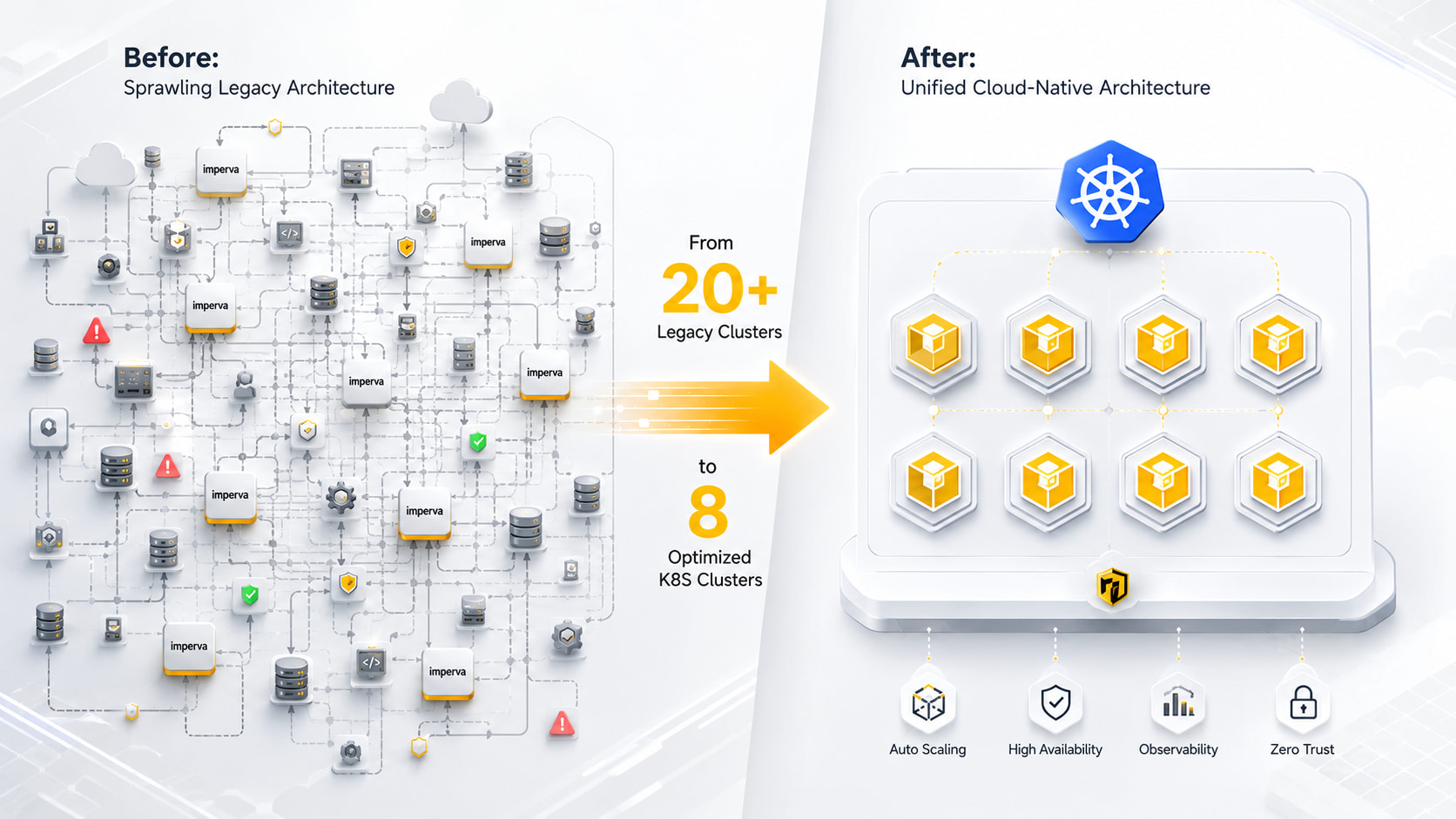
To address these demanding cloud-native requirements, CyberServal NGWAF executed its largest-to-date K8S deployment. The strategic solution shifted the enterprise from a sprawling legacy footprint into an agile, unified cloud security model.
Consolidation and Full Replacement of Legacy Infrastructure
CyberServal successfully streamlined the client’s security surface area by entirely replacing more than 20 legacy Imperva clusters. In their place, CyberServal AI-driven cybersecurity company engineered and deployed eight highly optimized, advanced K8S software clusters across Alibaba Cloud, Volcengine, and on-premises IDCs. This architectural consolidation significantly simplified the network topology while establishing unified global security policies.
Embedded Traffic Steering via the Janus T1K Module
At the core of this cloud-native deployment is the Janus T1K embedded flow control module, which was natively integrated across all production environments. Instead of forcing traffic out of the cluster for security inspection, the Janus gateway embeds deep packet filtering directly into the application ingress paths. This minimizes packet processing overhead and eliminates unnecessary network hops.
Dynamic Elastic Scale-Out and Scale-In Capabilities
By containerizing the security layer, the K8S CyberServal WAF cluster inherits native container orchestration benefits. The embedded Janus traffic steering mechanism communicates seamlessly with the Kubernetes Horizontal Pod Autoscaler (HPA). During sudden application spikes—such as localized promotional events—the WAF tier executes rapid, elastic scale-out actions to handle millions of new requests. Once traffic normalizes, the system scales in automatically, conserving valuable cloud compute resources.
👉 [Download CyberServal WAF Whitepaper]
Tangible Business Value Delivered by Modern Container Security
Implementing the K8S CyberServal WAF architecture completely transformed the enterprise’s digital operations:
- Seamless Hybrid-Cloud Harmony: The containerized security infrastructure functions flawlessly across Alibaba Cloud, Volcengine, and local IDCs, giving security teams a single pane of glass for multi-cloud policy enforcement.
- Extreme Traffic Resilience: The platform effortlessly absorbs sudden volumetric traffic surges via its highly automated, elastic autoscaling mechanics.
- Uncompromising High Availability: By migrating to a distributed, containerized K8S cluster architecture, single points of failure were eliminated, ensuring continuous application uptime.
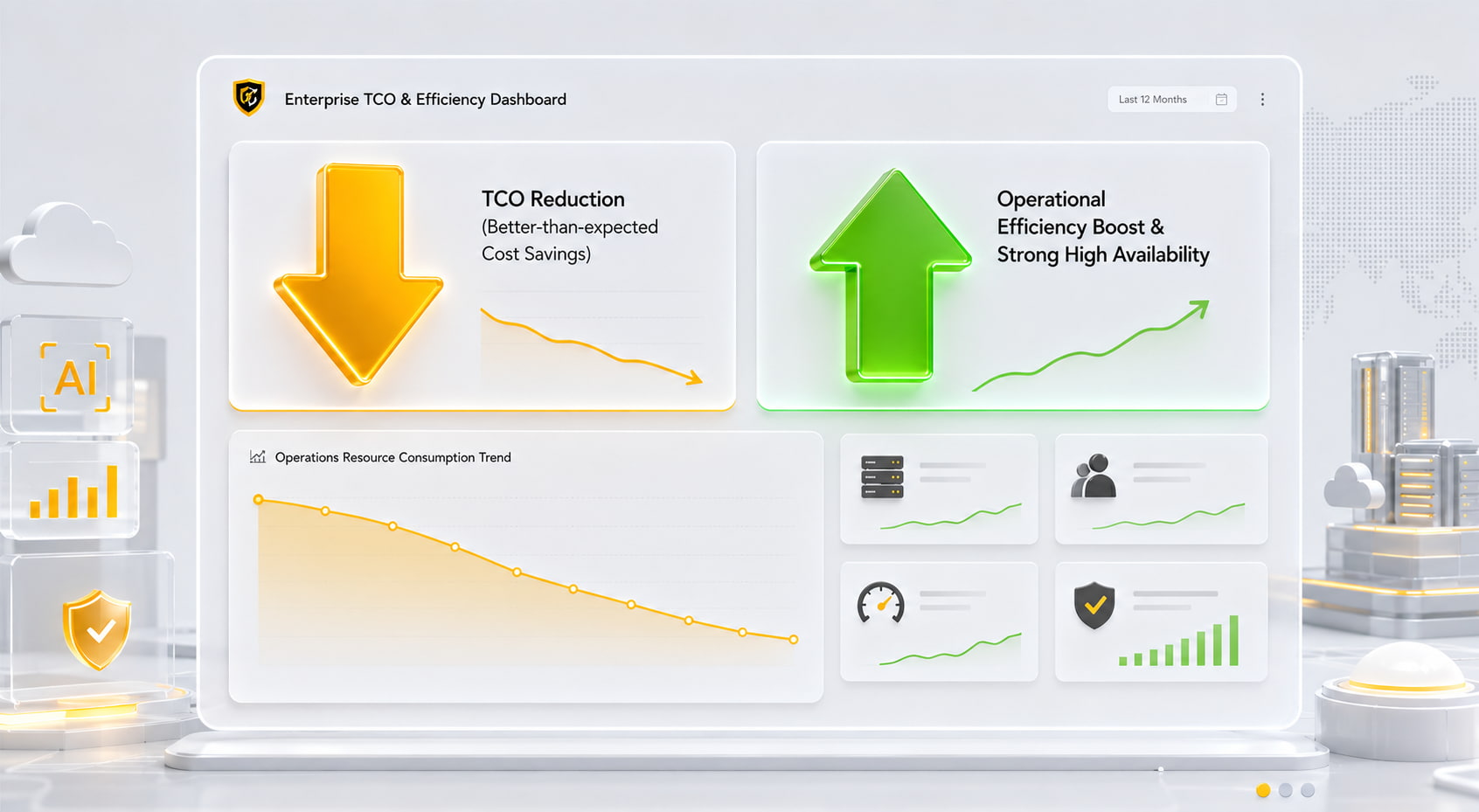
- Substantial Cost Optimization: Replacing over 20 fragmented legacy clusters with 8 centralized K8S clusters drove massive, better-than-expected reductions in TCO and boosted day-to-day operational efficiency.
👉 [Book a Demo]